

The Tiefenbach-Pfad takes you through grain fields and sunflower rows into an open, quietly beautiful summer landscape.
There are hikes where the landscape does all the talking — and the Tiefenbach-Pfad is very much one of them. Over 15.1 km, the trail unrolls a summer panorama of rippling grain fields, sunflower borders and long oak avenues that frame the rolling hills like a painted backdrop. I walked it on a clear summer day, and the light alone was worth every step.
How the trail unfolds
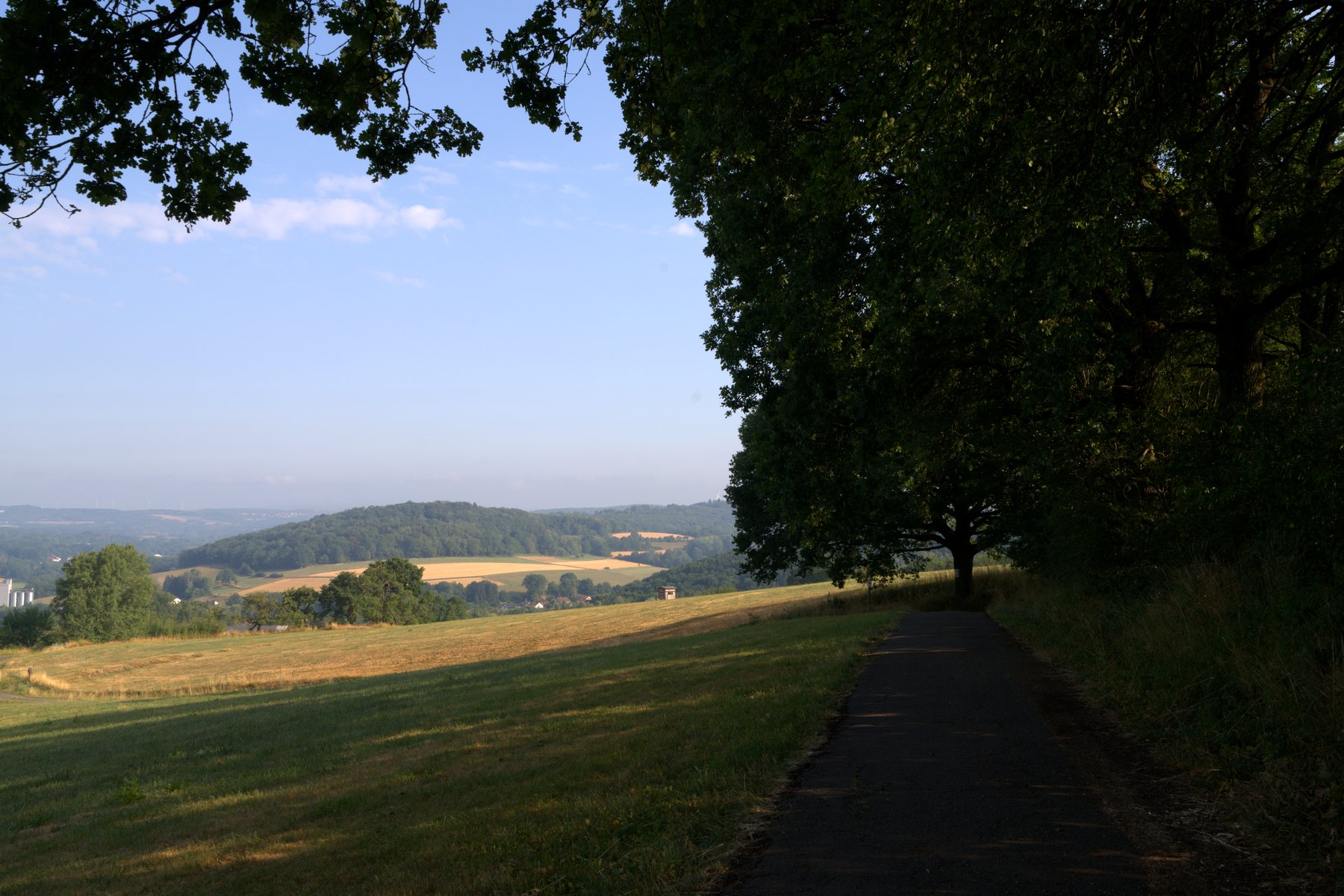
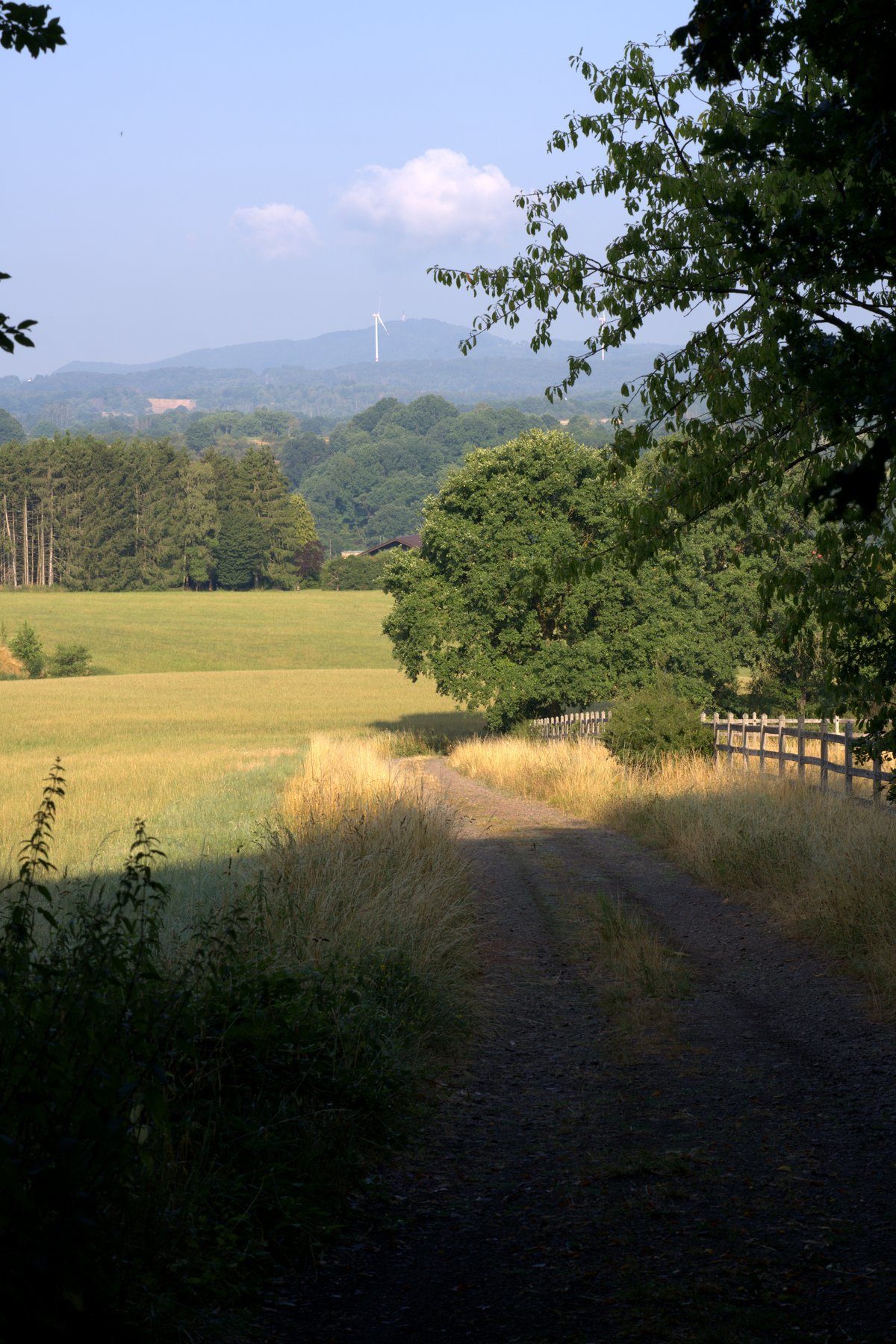
The first stretch sets the tone immediately. A shaded avenue of ancient oaks opens suddenly to a sweeping view across farmland and distant forest — the kind of vista that stops you mid-stride. The path is a wide gravel track here, cool under the canopy, before it spills out into full sun and the fields take over. Wind turbines turn slowly on the far ridgeline, a quiet reminder that this is a working landscape, not a museum piece.
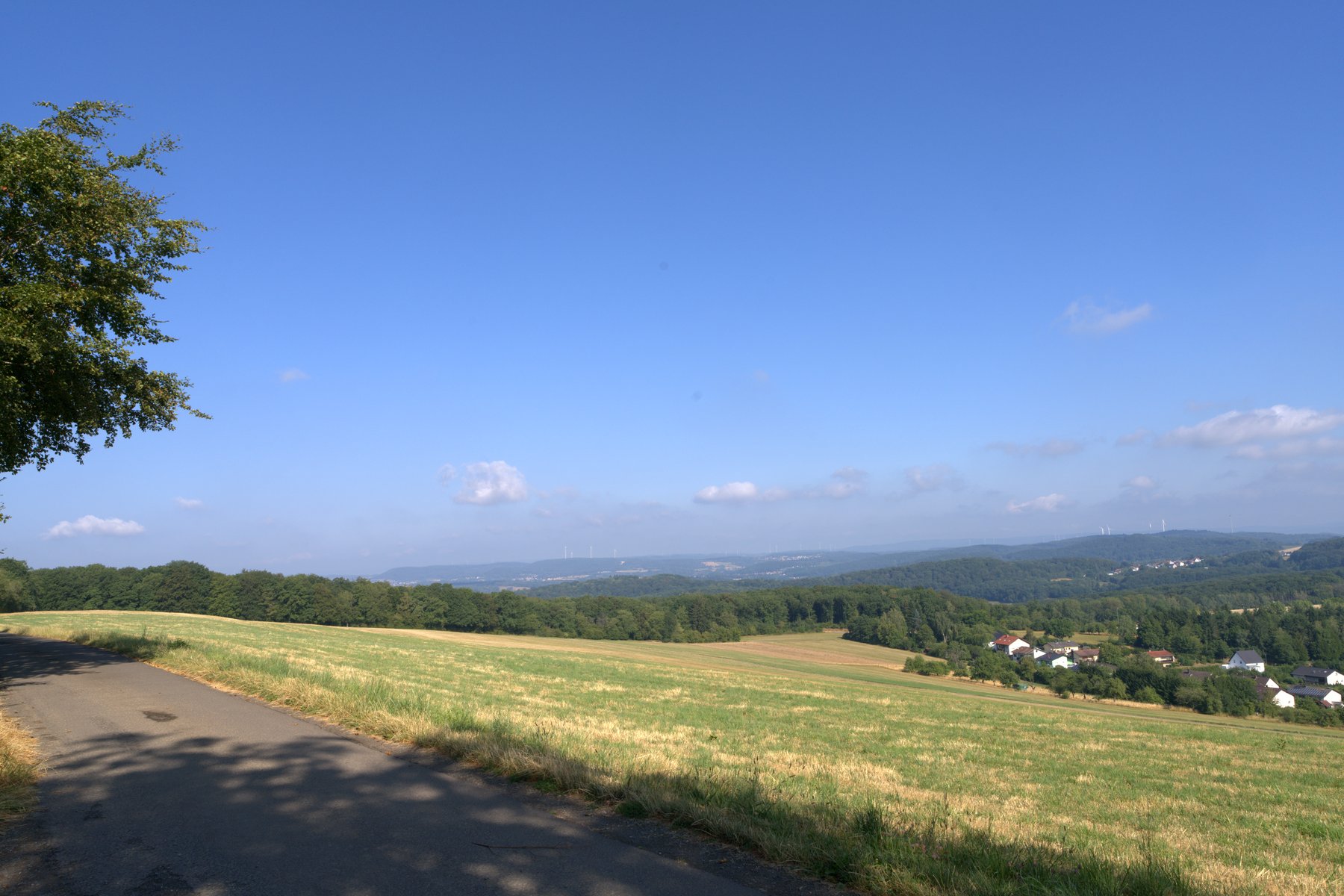
Further along, the trail crests a gentle rise and the panorama broadens: rolling green meadow slopes, a small cluster of white-painted houses nestled into the hillside, and forested summits stretching to the horizon. On a clear summer day the visibility is remarkable — you can trace ridge after ridge until they dissolve into haze. A tiny hiker silhouette on the far edge of a golden grain field puts the scale of it all into perspective. That image — a lone figure in an ocean of wheat — is one I kept coming back to as I walked.
The sunflower stretch
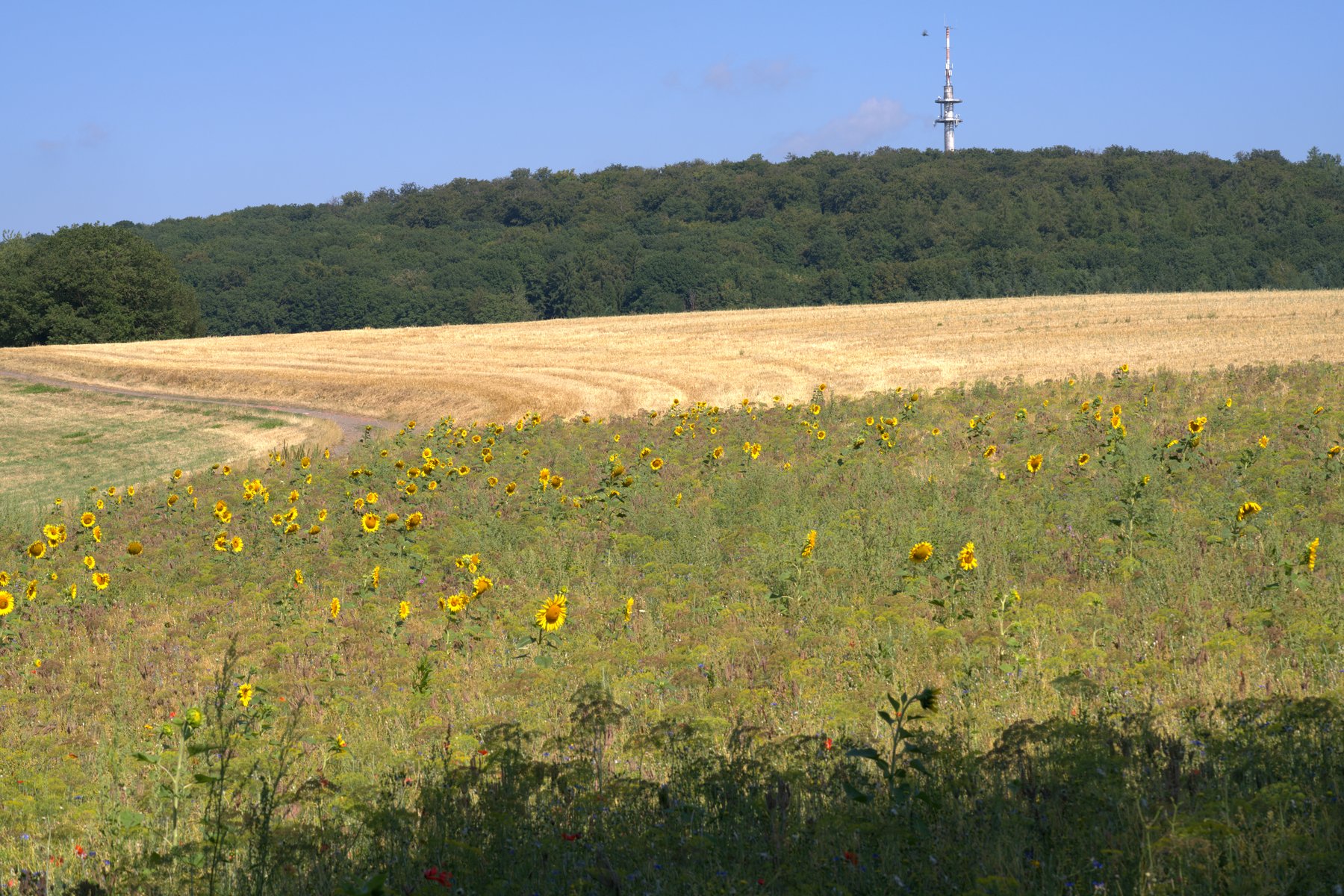
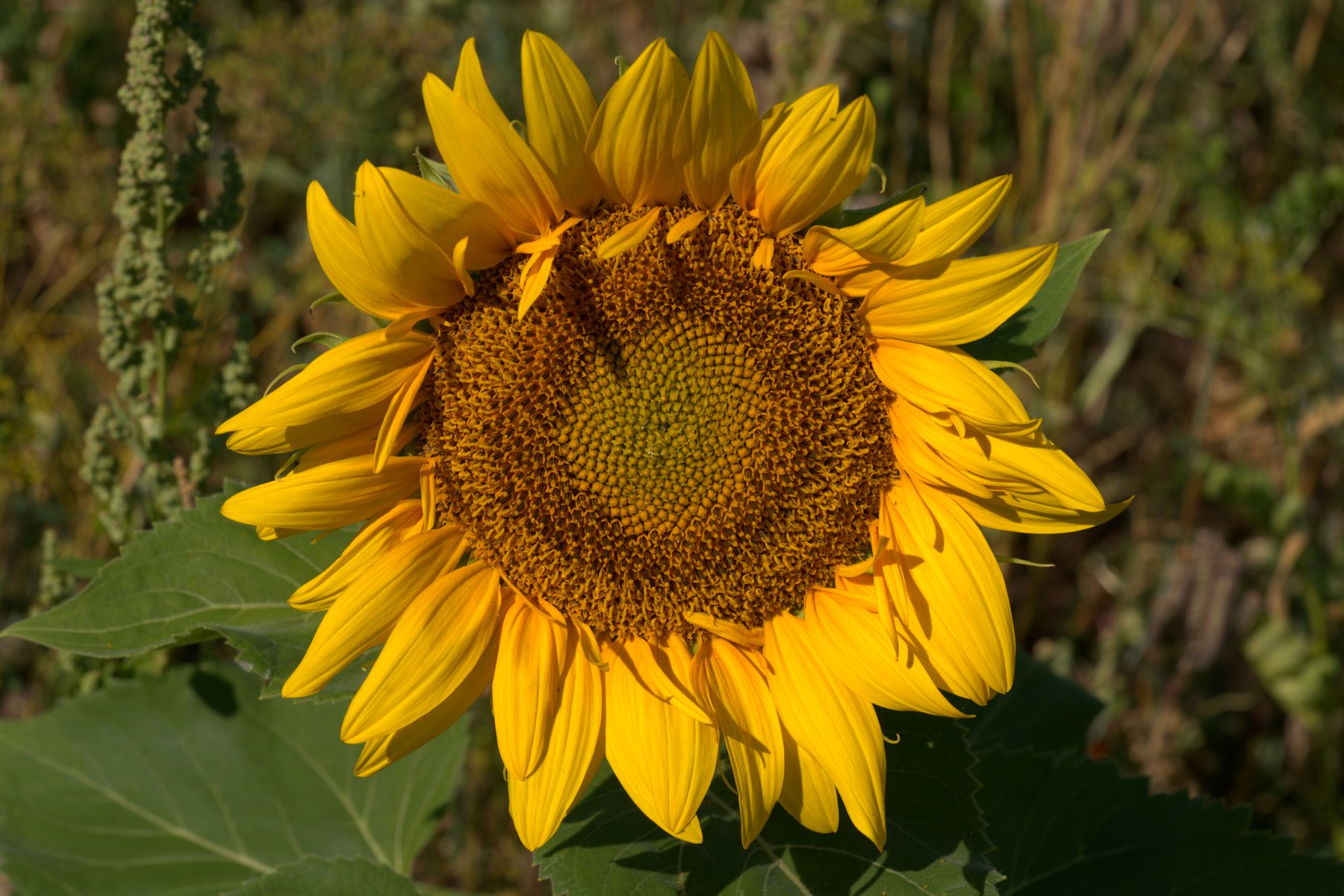
Midway through the route, a row of sunflowers lines the path. In full summer bloom, each head is turned towards the light, the spiral pattern of the disc perfectly defined. This is the kind of detail that rewards you for slowing down: the closer you look, the more intricate it gets. Behind the flowers, harvested grain fields glow amber, and a transmission tower marks the ridgeline above the tree line. It is unashamedly pretty, and there is no shame in stopping for ten minutes to take it all in.
Forest edges and quieter passages
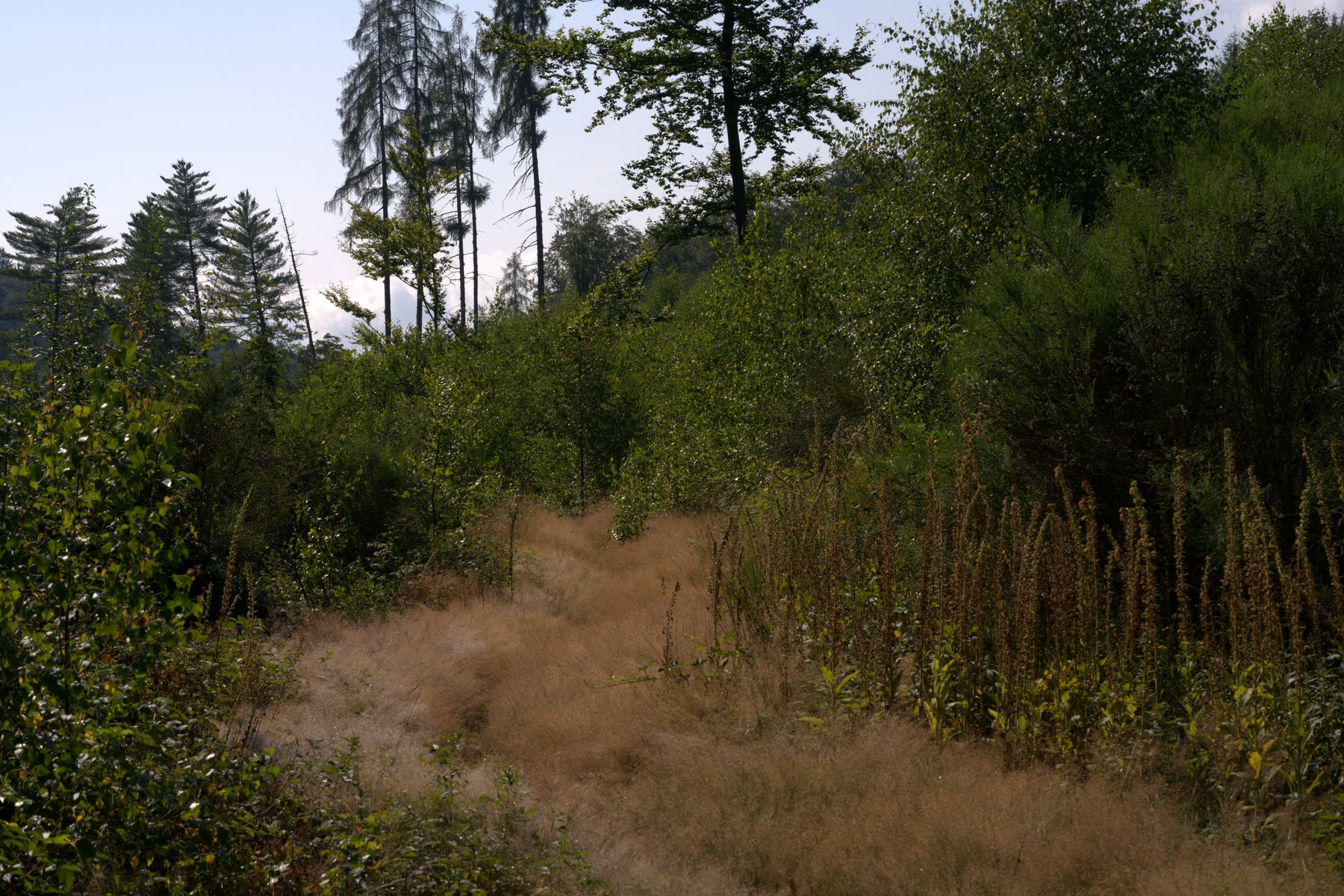
Not all of the Tiefenbach-Pfad is open and airy. There are stretches where the trail dips towards a forest edge — dry grasses and tall plants giving way to a mixed wood of conifers and broadleaves. The light turns softer and more diffuse here, the temperature drops noticeably, and the path narrows into something that feels wilder and less travelled. One section forms a natural green tunnel of overhanging trees, with morning light filtering through the canopy onto the track below. It is a good place to catch your breath before the trail opens again onto the fields.
Worth noting: the Tiefenbach-Pfad lies within the Saar-Hunsrück Nature Park, which means the forest sections are genuinely near-natural — old growth mixed in with working woodland, and a quietness that is hard to find closer to town.
Practical notes
- Distance: 15.1 km — plan for 3.5 to 4.5 hours at a relaxed pace, more if you stop frequently (and you will).
- Elevation: The route runs between roughly 318 m and 467 m, with no punishing climbs — just steady, rolling gradient throughout.
- Gear: Trail shoes are fine in dry conditions; the gravel and field-edge paths can get slippery after rain, so boots are a sensible choice if the forecast is uncertain.
- Water and food: Carry enough water — there are no documented refreshment stops on the route itself. Pack a lunch; the panoramic viewpoints make excellent picnic spots.
- Dogs: The wide field paths are well suited to dogs, though keep them on a lead near the crop fields in summer.
- Best season: Summer brings the grain fields and sunflowers to their peak and the long views are at their clearest. Spring and autumn also work well for the forest sections.
- Getting there: Check the Komoot tour page (ID 3119956910) for the most current start-point details and navigation — the trail is well documented there with the full GPX track.
One honest heads-up
The Tiefenbach-Pfad is not a trail of dramatic technical challenge — it will not test your scrambling skills or leave your legs screaming. What it does offer is something rarer: a long, unhurried walk through a summer landscape that feels genuinely unspoilt. The kind of walk where you arrive back at the car wondering where the afternoon went.