


The Rundwanderweg Hildebrechts Heimat leads through old village fabric, overgrown slate roofs and quiet forest paths – and straight into the Middle Ages.
What to expect on the Rundwanderweg Hildebrechts Heimat
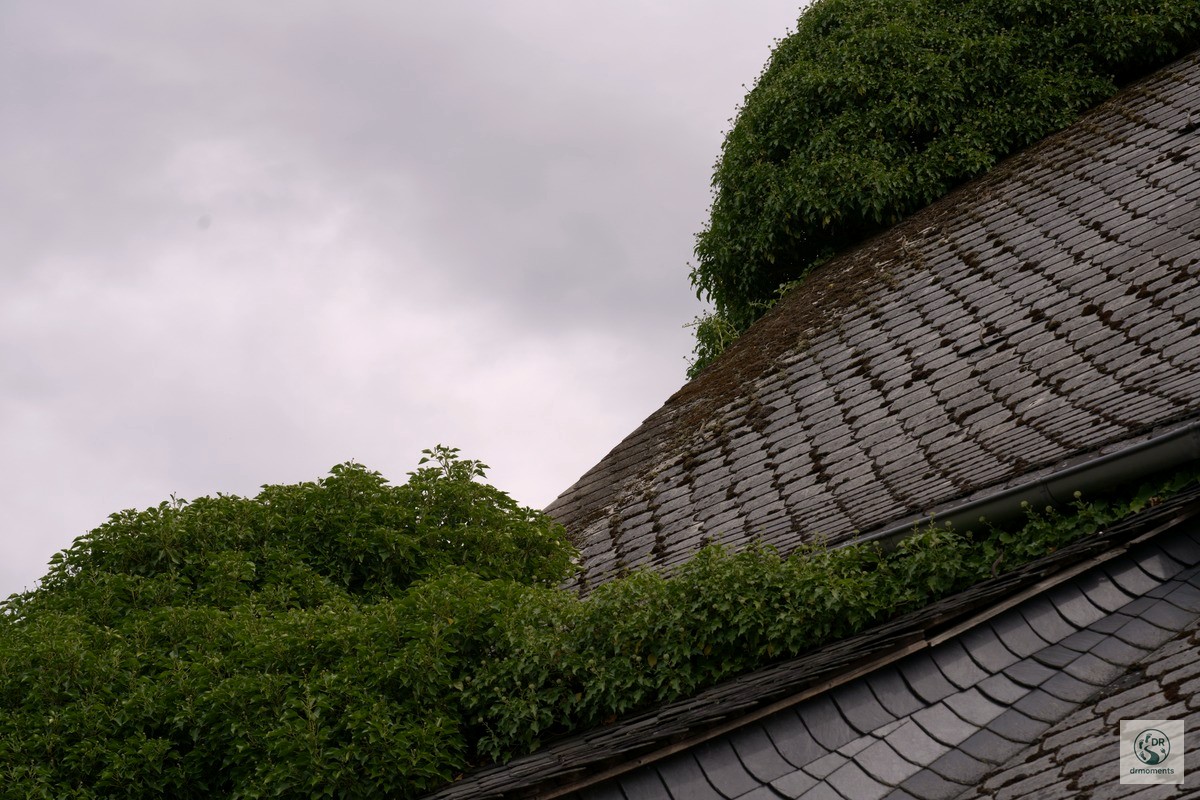
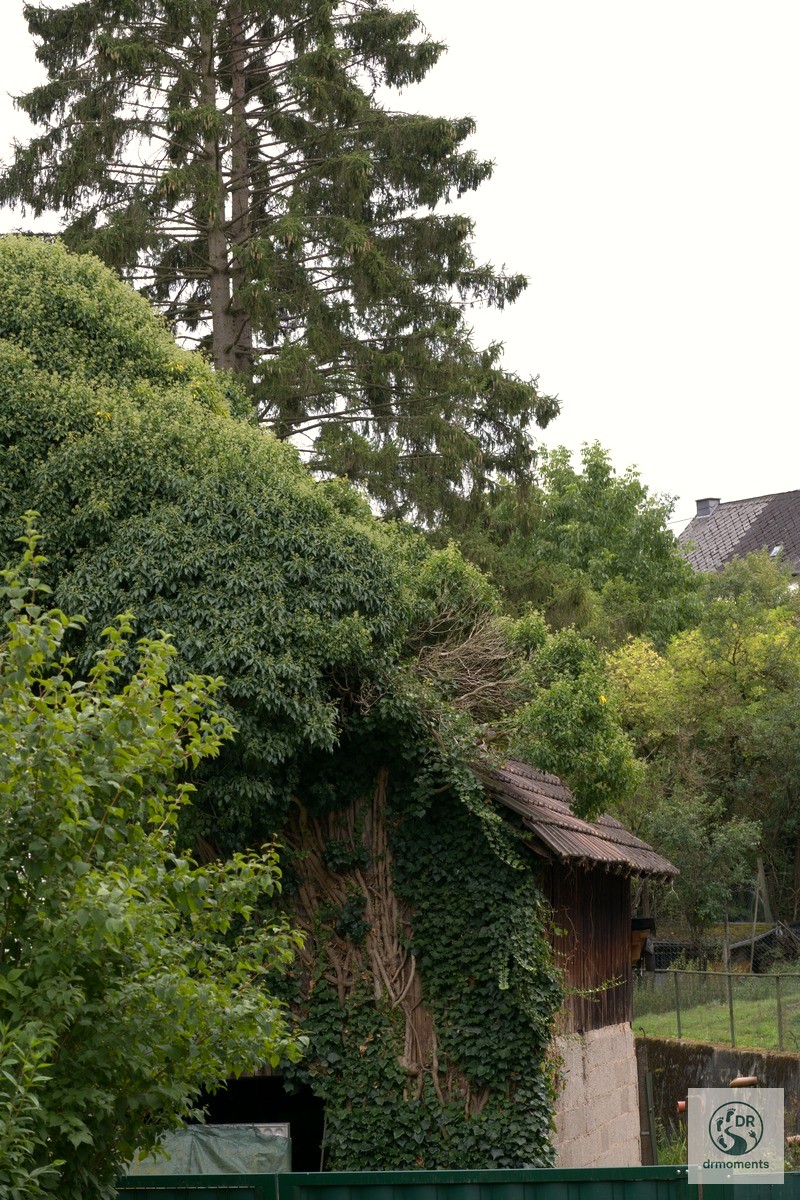
Sometimes a single image is enough to spark curiosity. On this tour it was an old slate roof, over whose ridge dense greenery arches – ivy and Virginia creeper reclaiming the building piece by piece. Exactly these kinds of details define the Rundwanderweg Hildebrechts Heimat: no spectacular backdrop at first glance, but one that reveals itself with every step.
The start: forest, roots, soft light
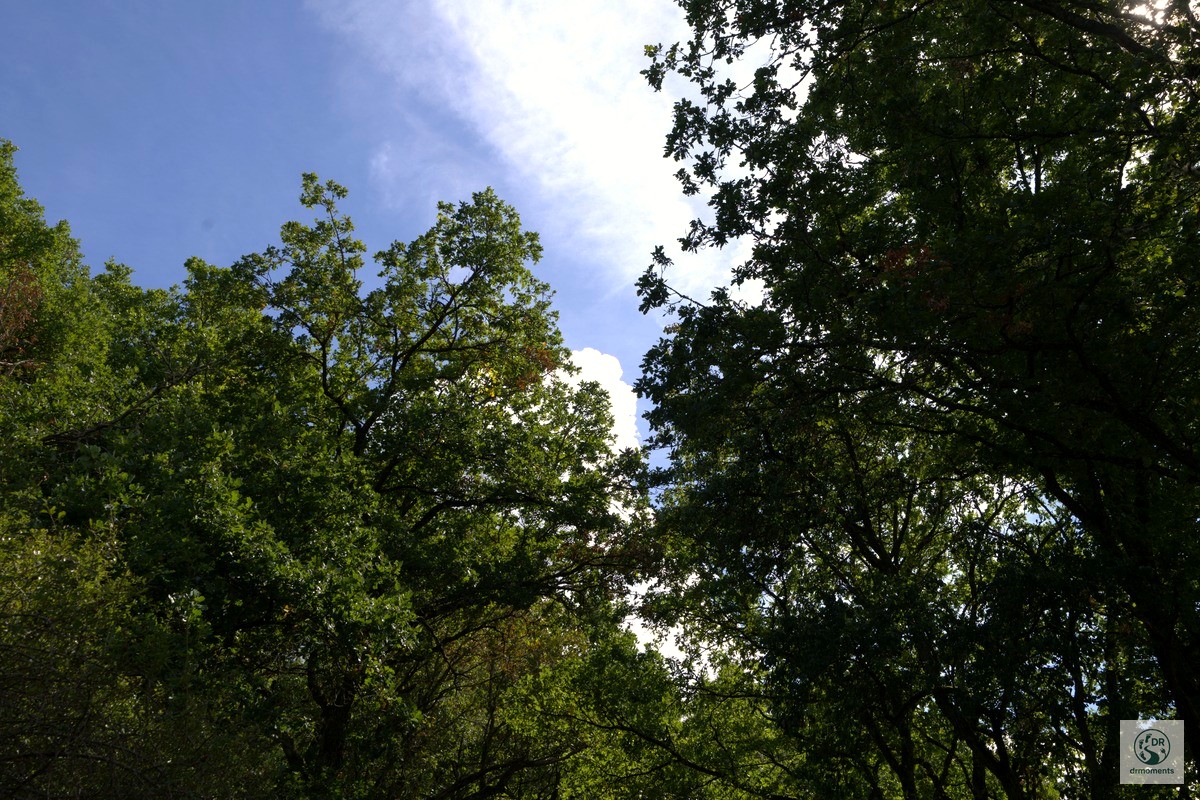
The trail begins in the forest. Tree roots wind their way over steep slate rocks, as if wanting to demonstrate how nature burrows into the ground over millennia. The light on this overcast summer’s day is muted – no harsh sunlight, but a soft, even green that filters through the tree canopy. Anyone who looks upward sees a sky of thin cloud through the leaf canopy. Quiet. Almost meditative.
Shortly after, the first signpost appears: “Hildebrechts Heimat” with a coat of arms, fixed to an old deciduous tree. From here it is clear that you are on a well-conceived themed hiking trail. Stainless steel information panels await at several stations – anyone who stops and reads them will understand why this trail has its name. It is named after Hildebrecht von Hosenbach, the father of Hildegard von Bingen, the most famous woman of the Middle Ages, whose manor and presumed birthplace is thought to have stood on the site of today’s village church.
In the heart of the village: church, ivy and time to look
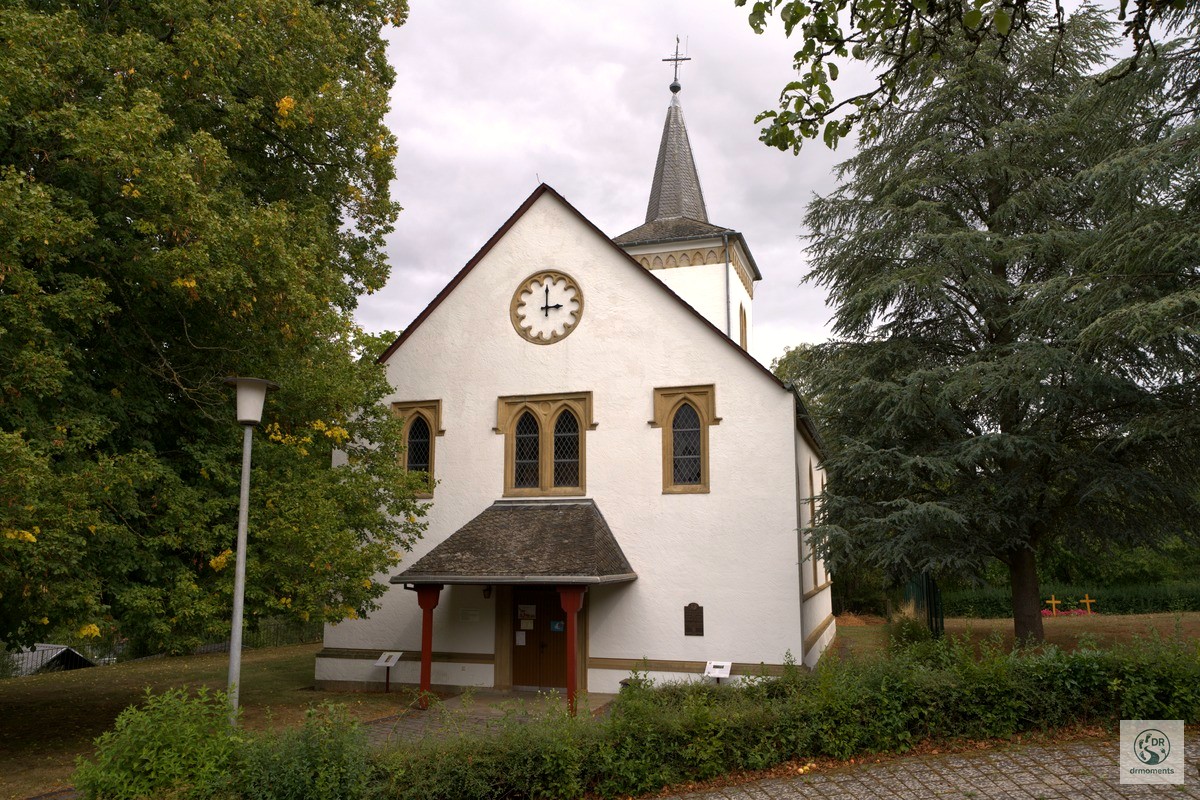
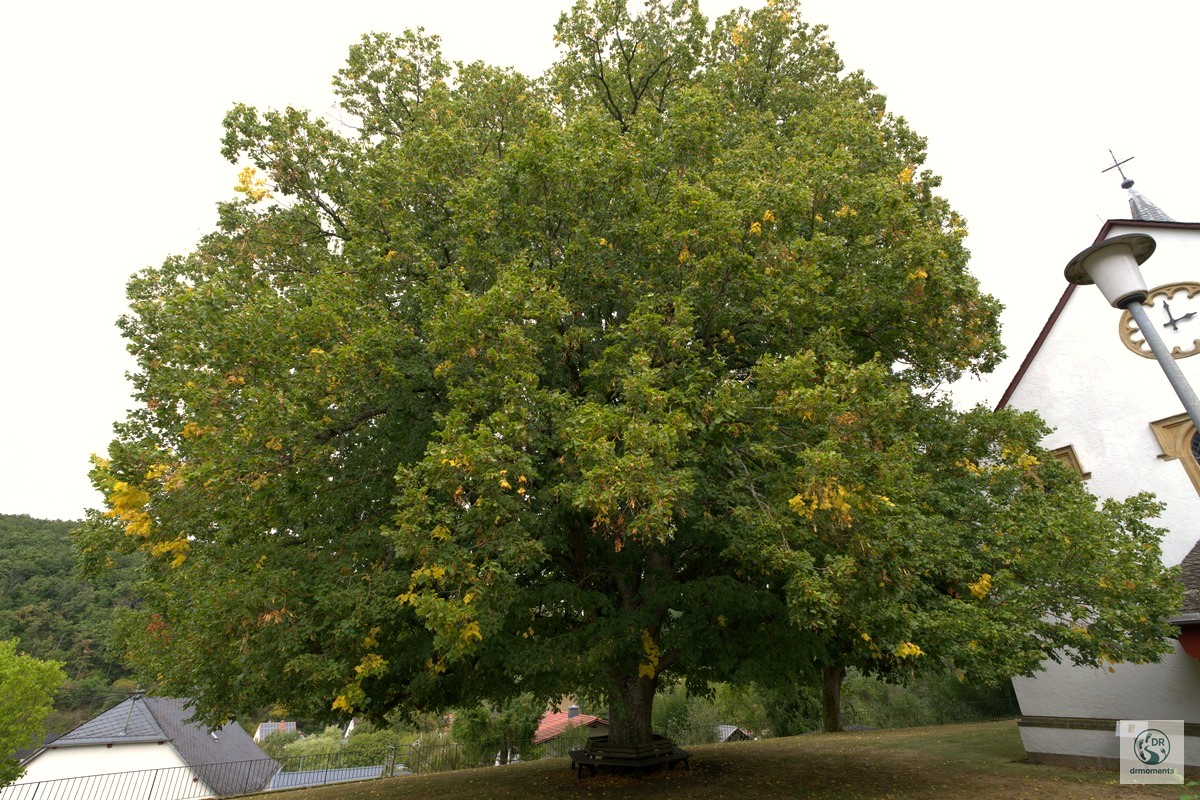
Walking through the district, the view opens up through the foliage: half-timbered house, church tower, hilltops – an image that stays with you. Shortly afterwards you stand before the whitewashed village church, which with its plain façade, the clock face above the entrance and the pointed-arch leaded windows seems to come straight from another century. A linden tree stands beside it, with a circular bench in front. This is where you pause.
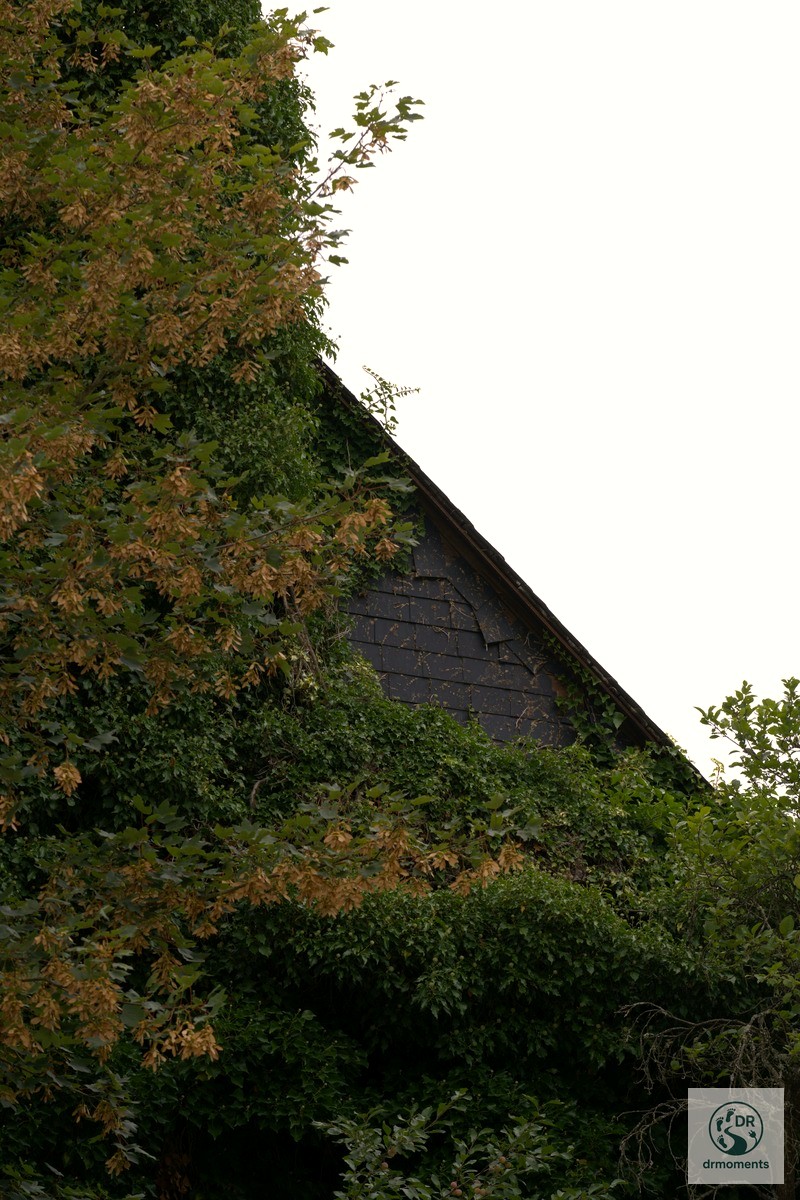
Around the church it is worth walking slowly and looking closely. An old slate roof whose ridge is overgrown with a dense covering of plants – this is not decay, it is village history you can see. The greenery grows in a perfect arc over the roof edge, as if someone had given it a hedge trim. For photographing: step back a little so that the full extent becomes visible.
An insider tip for anyone who wants to see the church from the inside: alongside a historic Stumm organ it houses a facsimile edition of Hildegard von Bingen’s “Liber Scivias” – a work of art and historical document in one. Admission is free, and the church is generally open during the day.
Through forest and over heights back again
The second half of the circular trail leads over a longer ascent up onto the heights of the surrounding terrain. At the top an viewpoint awaits, from which the hilly forested landscape of the Nahebergland – part of the southern Hunsrück – can be surveyed well. Anyone who breathes in the air after rain will understand why you keep coming back here.
On the descent you pass old rubble-stone walls that are half sinking into moss and have arched passageways – silent witnesses to a craft that almost nobody masters any more. The forest path becomes lighter, oaks and deciduous trees alternate, deadwood lies picturesquely at the path’s edge. None of it is staged. It is simply forest as it should be.
Practical information
- Getting there: Via the A61 towards Bad Kreuznach, then B41 to Herrstein, continuing on the K28. Parking is available in the village.
- Refreshments: In the neighbouring village of Herrstein there are places to eat – ideal for after the tour.
- Equipment: Sturdy footwear is essential, especially after rain – the slate paths become slippery. A rain poncho is worthwhile in changeable summer weather.
- Best time: The trail works in any season. In spring the juniper heath sections come into bloom, in autumn the deciduous forests glow. Anyone wanting to photograph the ivy motifs: diffuse light on overcast days makes the greens particularly rich.
- With children: Manageable, but sure-footedness is a prerequisite – and allow enough time to stop and take in all the stations and information panels along the way.
Stay in the region – holiday apartments around Birkenfeld.
View accommodation in Niederhosenbach
* Affiliate link: If you make a booking I receive a small commission – the price does not change for you.
👕 My product recommendation
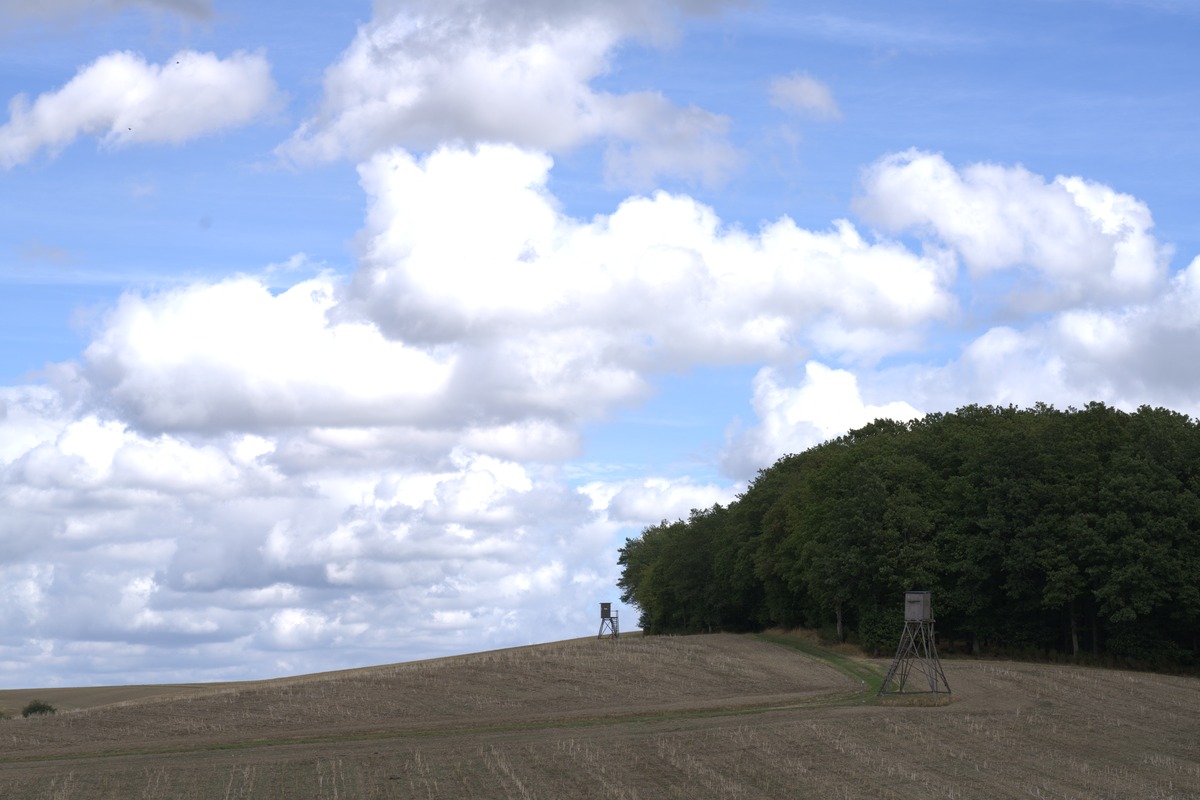
Harvested fields and a forest edge in Rheinland-Pfalz under
Harvested fields and a forest edge in Rheinland-Pfalz under a dramatically cloudy summer sky – two hunting stands define the wide landscape.
👕 Juniqe
* Advertisement / affiliate link: If you make a purchase I receive a small commission – the price does not change for you.