


The Skulpturenweg Cerda Celtoi leads through damp autumn forest, across a wild rocky sea – and makes thousands of years of Celtic history tangible.
Between moss forest and stone sea: what to expect on this loop
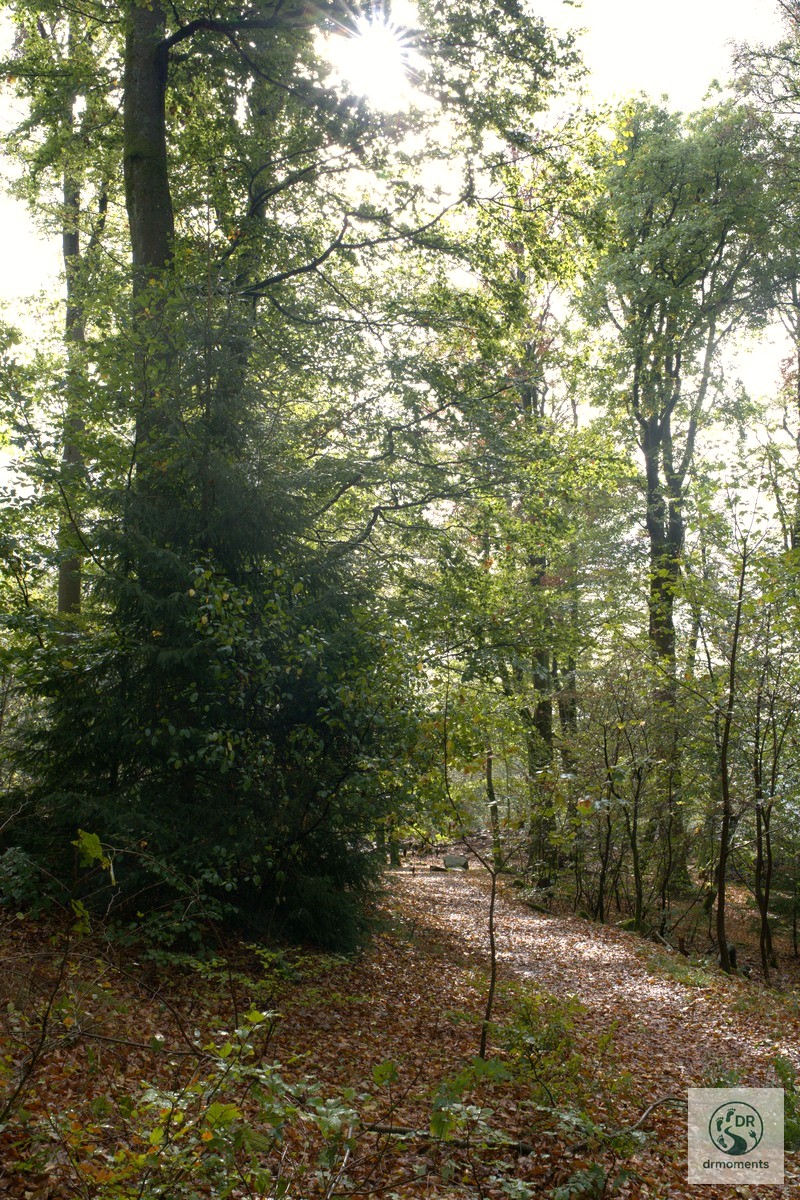
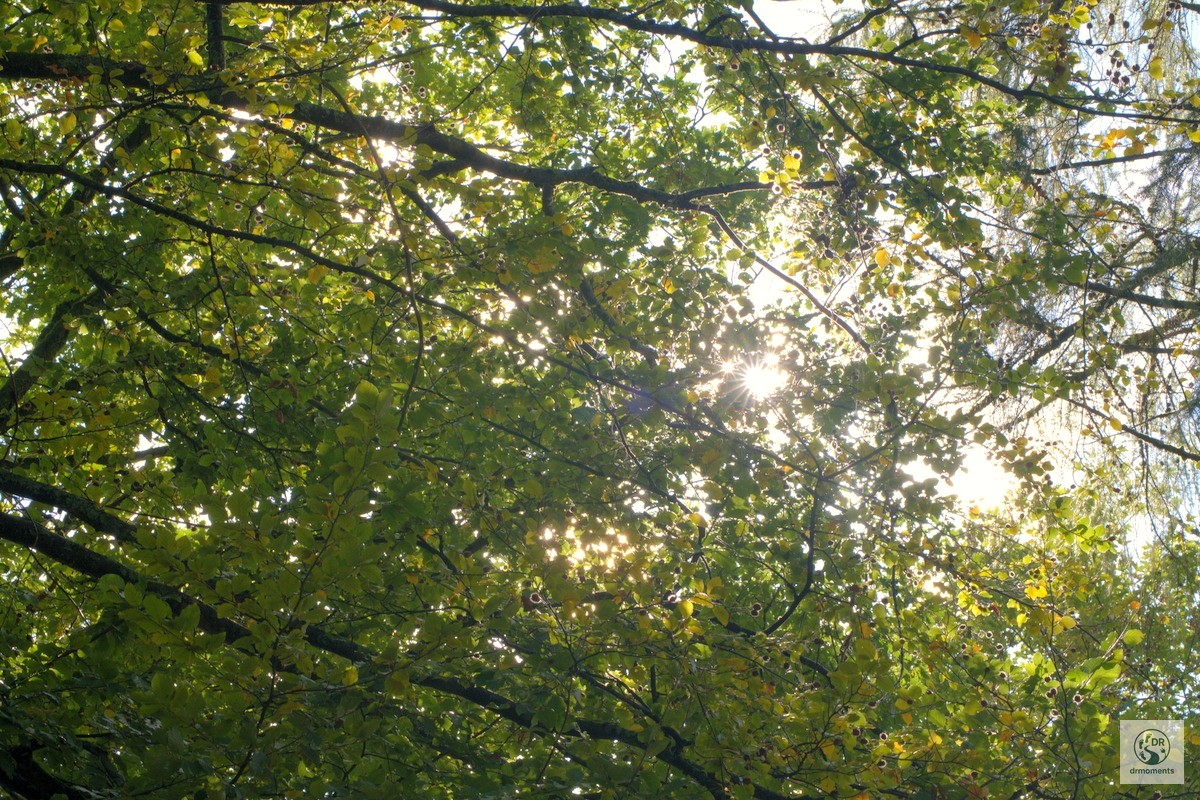
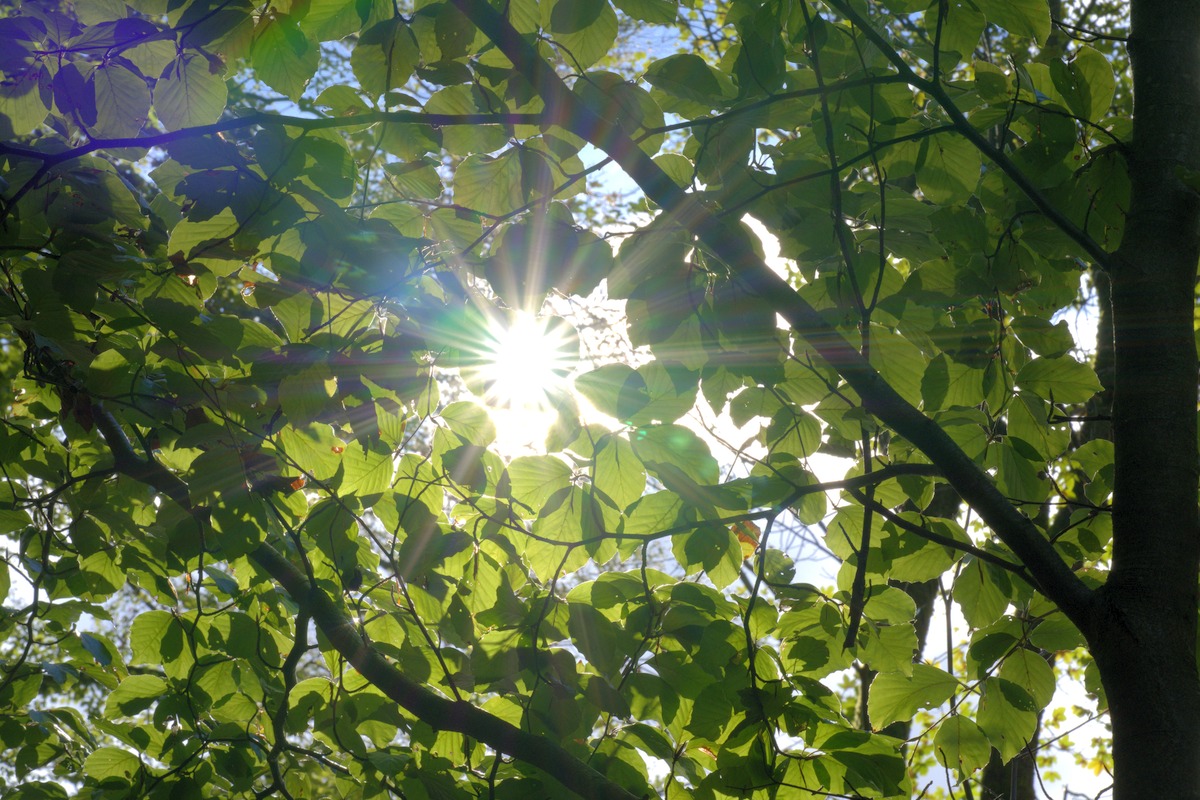
You’ve barely stepped into the forest when you notice it: something is happening to you here. Even the first steps on the Keltischer Skulpturenweg Cerda Celtoi near Nonnweiler, district of St. Wendel, have nothing in common with an ordinary woodland walk. The ground is damp, the moss glows in a deep green that feels almost unreal even on grey autumn mornings. Beechnuts lie split open among cushions of star moss, brown leaves cling wetly to the forest floor. The light falls diffusely through the canopy of leaves – muted, still, somehow concentrated.
The route measures 3.8 km and covers around 120 metres of elevation – from the start at roughly 502 m it climbs to around 627 m. Short, but no gentle stroll: the terrain changes abruptly, and the middle section on the rocky sea in particular demands full attention.
Through the moss forest – the first steps
The entry leads through deep mixed deciduous forest. Those who walk slowly and look downward discover a micro-world: moss rosettes on dark tree bark, bright green cushions on mighty beech trunks, fine details you’d otherwise simply miss. I spent at least twenty minutes more here than planned – simply because the forest floor has so much to tell. That’s part of what this trail is about.
Somewhere among the trees they appear: the sculptures of the Cerda & Celtoi project. 18 contemporary artists from 15 European countries created works between 2005 and 2007 that connect Celtic themes with contemporary art – predominantly from regional sandstone, but also from wood and iron. You almost stumble over them, so naturally do they fit into the forest. A modern runestone here, a stone heart there. You have to look carefully to see them.
The rocky sea – sure-footedness is essential
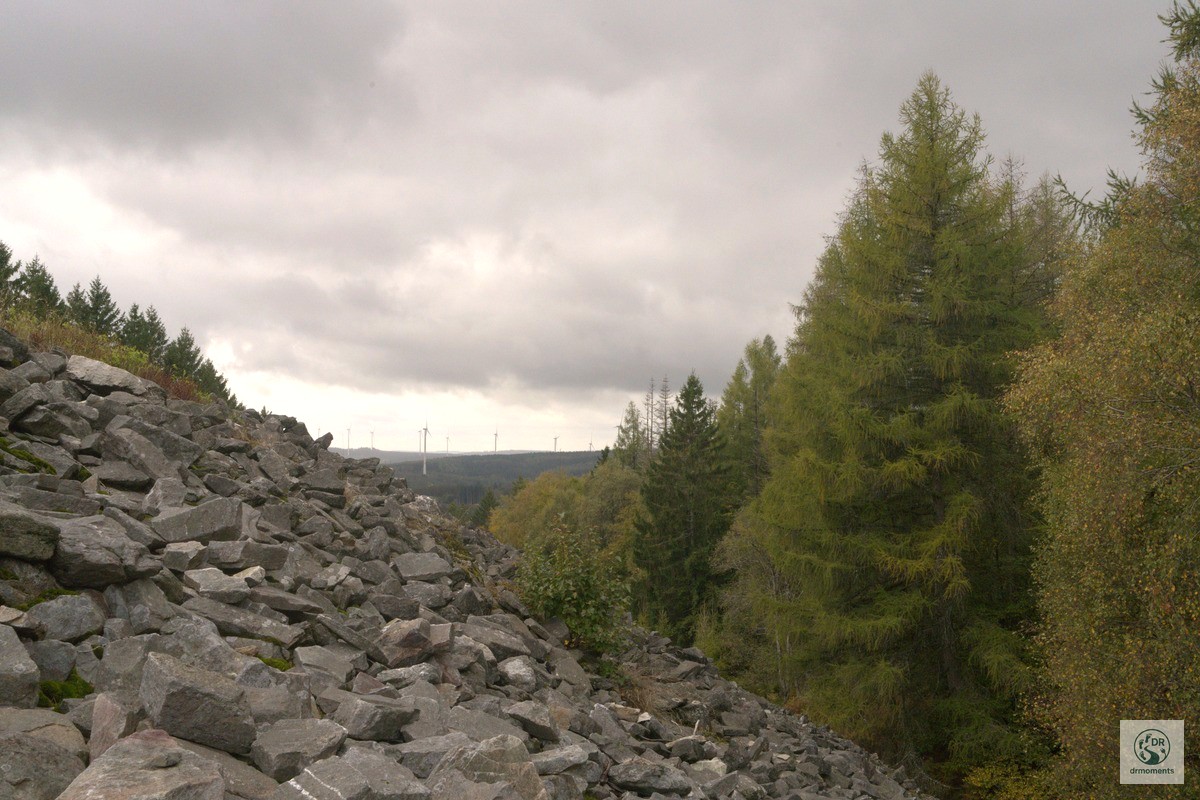
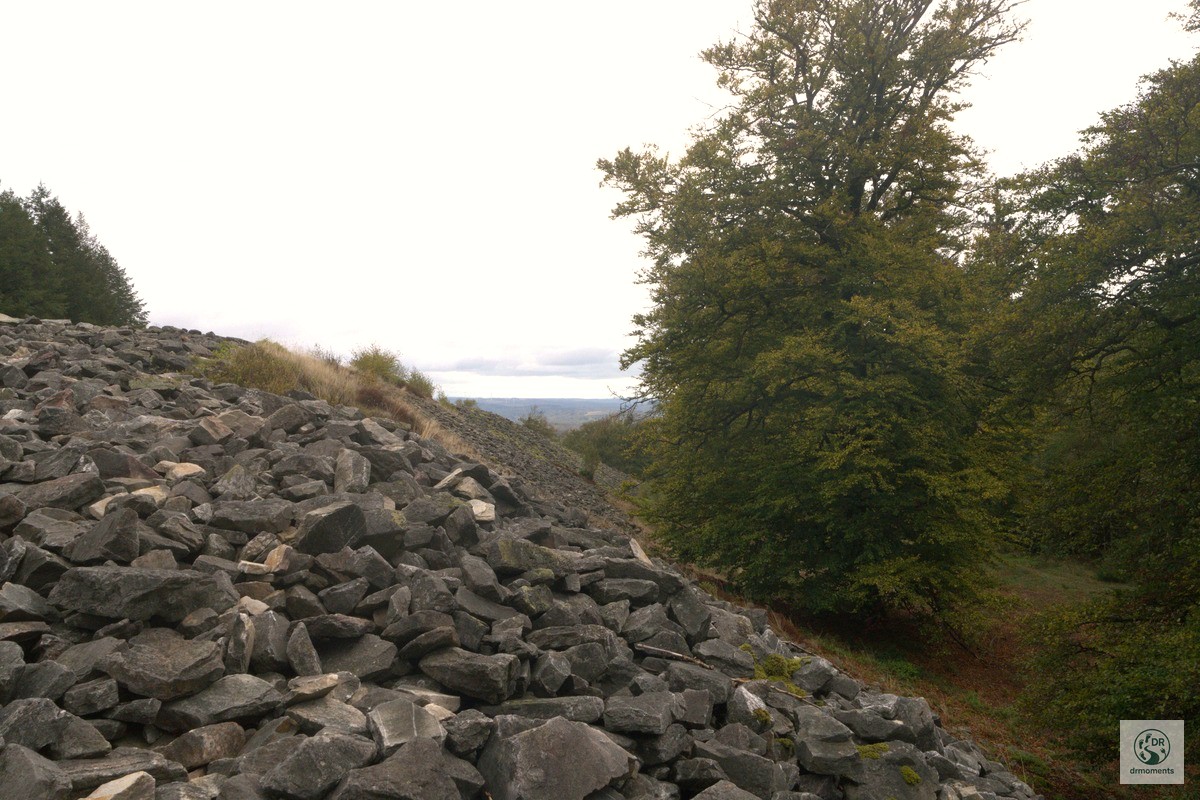
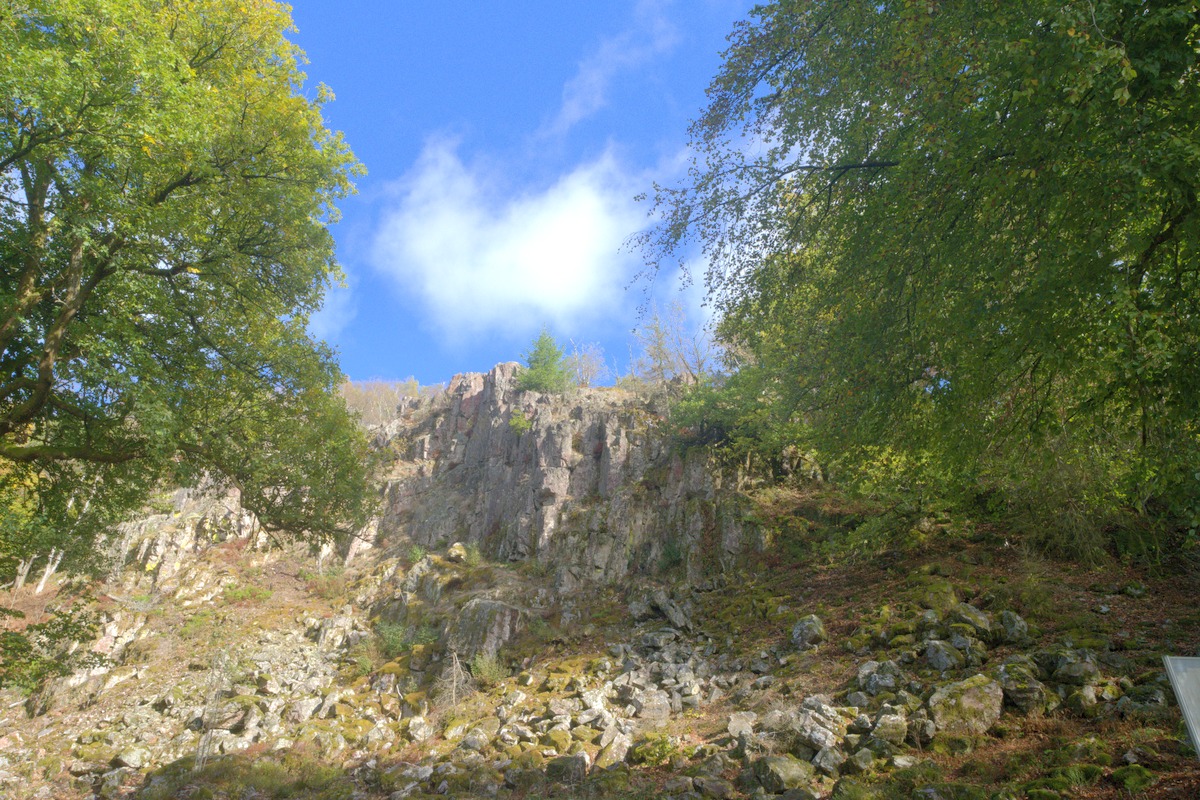
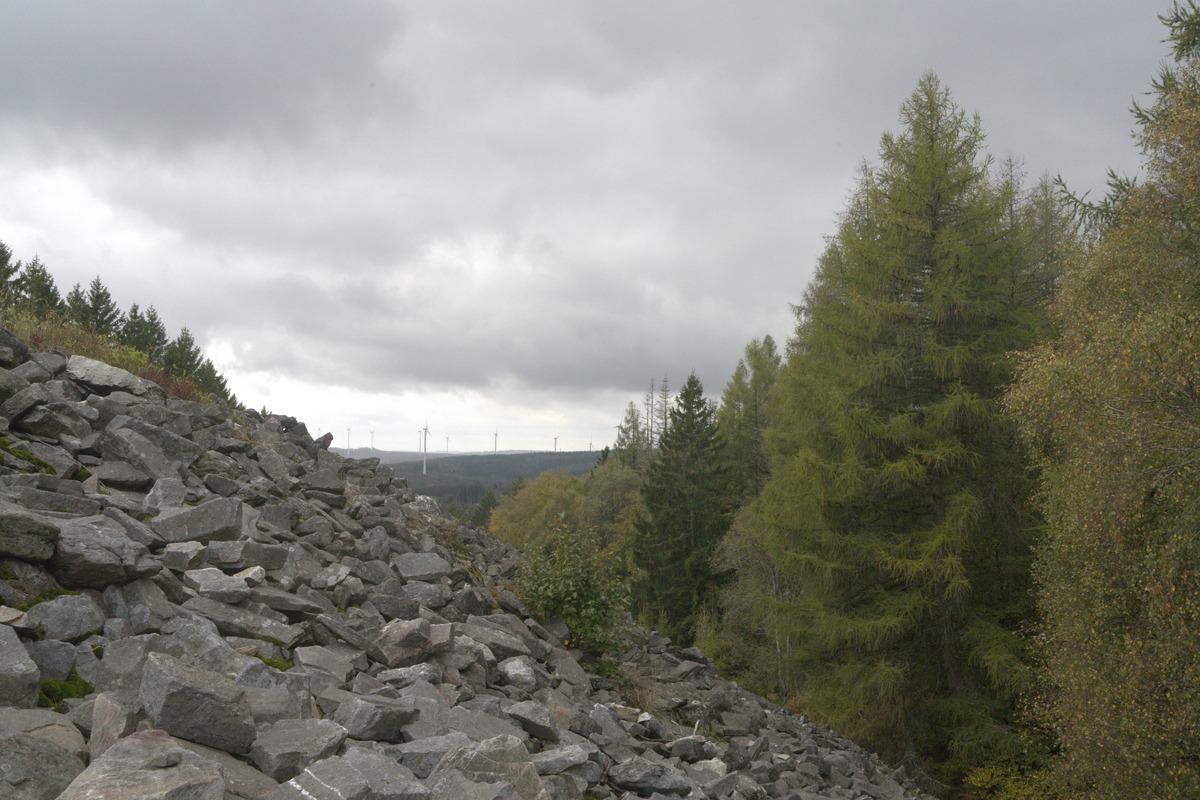
Then comes the section that truly makes this hike unique: the rocky sea. Angular, grey-green stones as far as the eye can see, with a narrow path threading between them – or sometimes none at all. From up here the view opens out into the valley, and in the background the white wind turbines stand in a row. This contrast – ancient quartzite rock, modern energy installation – is a real photographic motif, and I set up my tripod more than once.
A few steps further on, the slope offers a wide view into the Saarland that carries far in clear autumn weather. Traversing slowly is the rule here: the angular rock cannot be guessed at but must be felt out underfoot. Sturdy footwear is not an optional tip but a genuine requirement.
The ring wall – history beneath a canopy of leaves
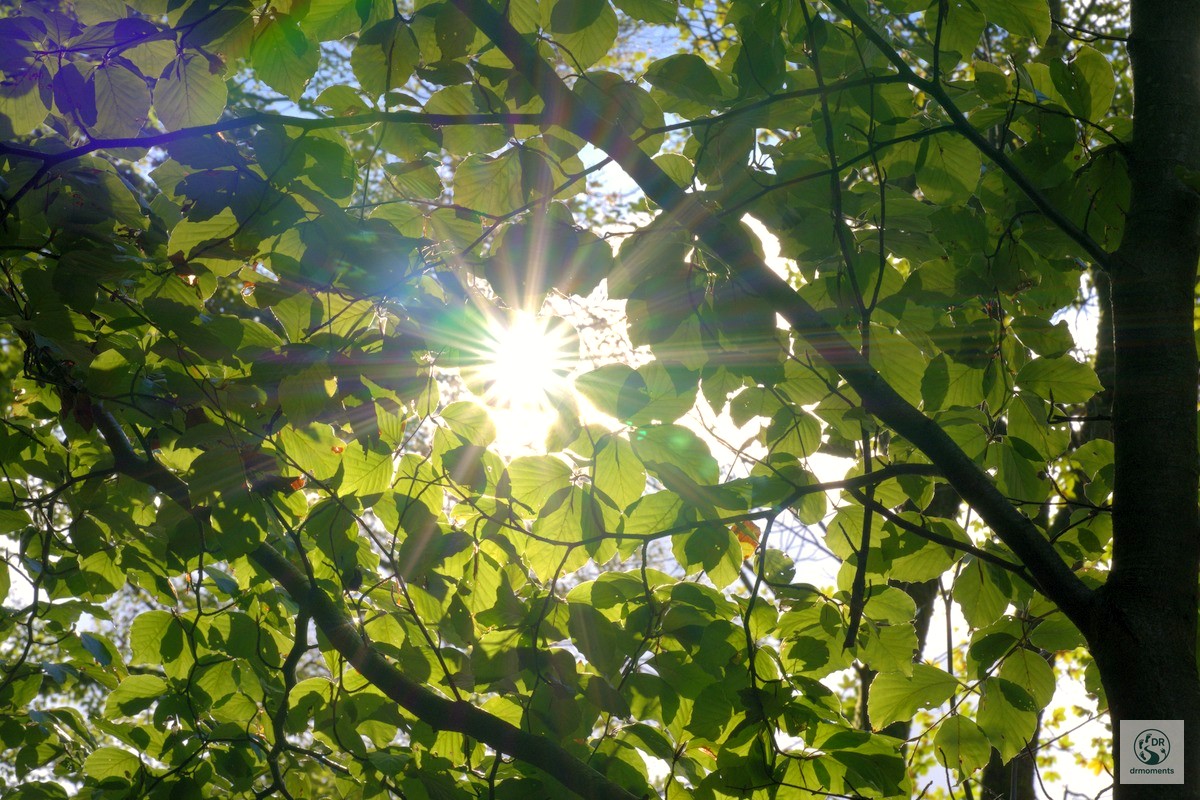
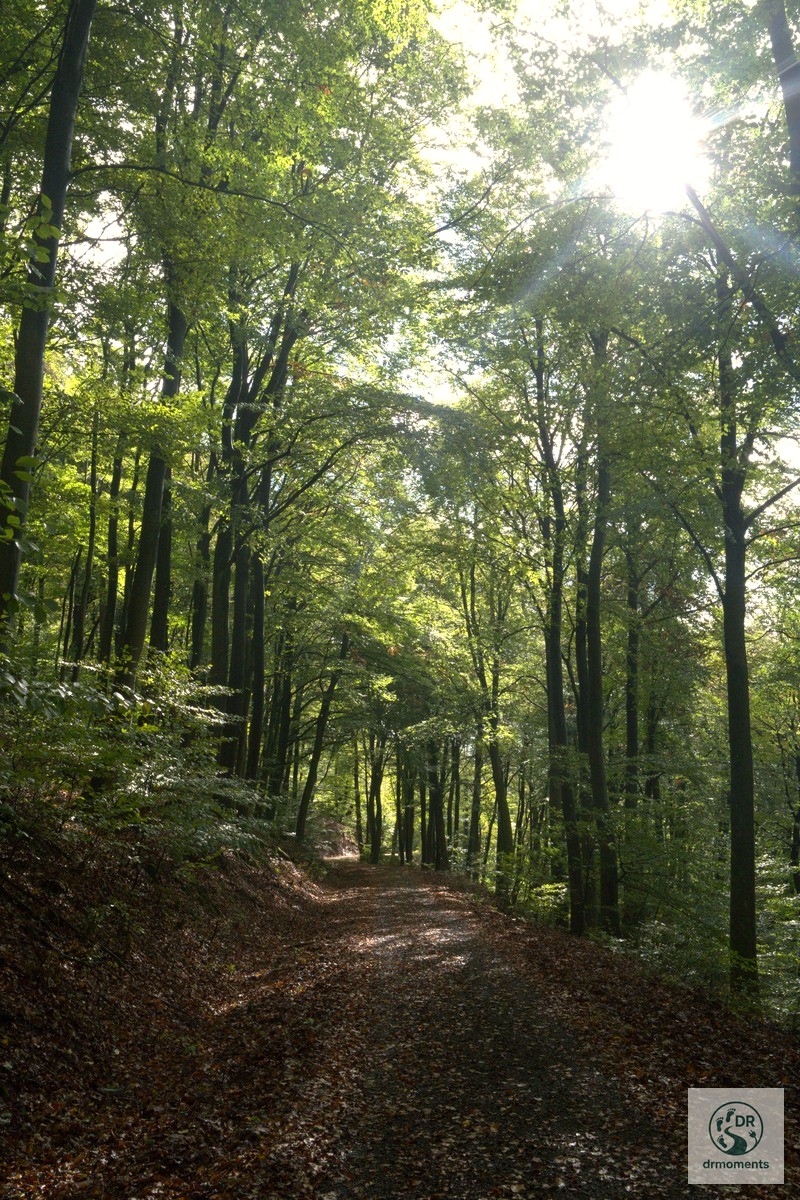
At the upper end of the rocky sea, the path opens up again into quieter forest. Wide beech trees flank the trail, light grazing at an angle through the autumn leaves. Those who know what they’re walking over slow down here: this area is part of the surroundings of the Hunnenring, one of the most significant Celtic ring walls north of the Alps. The mighty stone ramparts that once secured the plateau are still visible today – as long, tree-covered ridges in the forest that stand out clearly from the normal ground. Information boards along the path explain what life here might have looked like more than 2,000 years ago.
Practical information for the tour
- Starting point & parking: The forest car park on the Ringwallstraße in Nonnweiler-Otzenhausen is free of charge and right at the start of the trail. Alternative: car park at the Europäische Akademie Otzenhausen, Europahausstraße 35.
- Getting there: Via the A1 towards Trier, exit Nonnweiler, then towards Otzenhausen.
- Equipment: Sturdy hiking boots are essential – especially on the rocky sea. In autumn the forest floor is slippery. Poles help on the descent.
- Refreshments: There is a pub in Otzenhausen; alternatively, the Europäische Akademie Otzenhausen sometimes operates a café – check ahead.
- Best time of year for photos: autumn and early summer. In autumn the moss glows, the rocky sea reveals itself without dense foliage, and the long views are clear. In the evenings between 5 and 6 pm the last light bathes the beech forests in golden stripes.
- With children: The sculptures are a real magnet – those who take the tour slowly and allow time to search can easily bring children along. The rocky sea does, however, require sure-footedness from the little ones too.
Summary
3.8 km that feel significantly longer – in the best sense. Those who walk slowly, look carefully and let the sculptures hold them up will experience on the Skulpturenweg Cerda Celtoi a tour that connects history, art and nature in the tightest of spaces. The rocky sea alone is worth the walk. The rest is a bonus.
Stay in the region – holiday apartments around St. Wendel.
View accommodation in Nonnweiler
* Affiliate link: If you make a booking I receive a small commission – the price does not change for you.
The Keltischer Skulpturenweg Cerda Celtoi for your home
My photos from this tour are available as products — printed and delivered by Juniqe.
* Affiliate links: If you make a purchase I receive a small commission – the price does not change for you.